Sure! Here's your text translated into English:
Hello!
This is the Tiger Trainer from the fitness space in Beomeo-dong, South Korea!
Today, I'm going to share a chest workout routine that even beginners can easily follow.
I encourage you to try applying it to your own workout and see how well the theoretical aspects hold up in practice.
The Basics of Chest Workouts

In our fitness space in Beomeo-dong, when we look at videos about chest workouts on YouTube or Instagram, we see that there are countless options. But before we dive in, it's important to understand the structural shape of the chest muscles.
Understanding Chest Muscles:
The chest muscles are primarily divided into the pectoralis major and pectoralis minor, and within this, we need to focus on effectively working the pectoralis major.
So, how do the pectoralis major muscles move during contraction and relaxation?
The pectoralis major attaches from the arm to the sternum in the center of the chest, forming a horizontal shape.
When the pectoralis major contracts, the arm needs to come together toward the point where the chest muscle attaches.
As the muscle shortens horizontally, it swells vertically, making the chest appear to bulge during contraction.
The chest muscle can be divided into three parts based on movement:
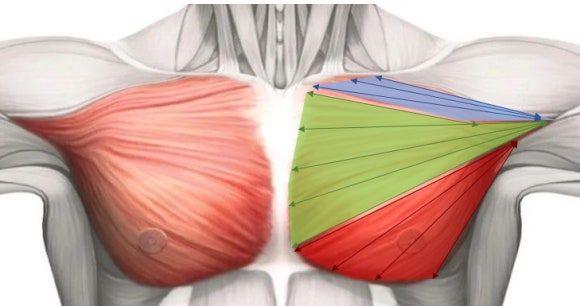
- Upper (Blue)
- Middle (Green)
- Lower (Red)
When contracting the upper chest, the arm should follow the upper direction of the chest.
When contracting the middle chest, the arm should follow the middle direction of the chest.
And when contracting the lower chest, the arm should follow the lower direction of the chest.
When performing these movements, especially for beginners, the pectoral muscles might not fully open, which can lead to shoulder injuries during pressing exercises.

Packing Process:
To prevent this, we use a process called "packing" to firmly stabilize the shoulders and shoulder blades and open the chest forcibly before starting the exercise.
For those whose chest isn't restricted, the shoulder's movement can also be utilized during the workout, which is more suitable for intermediate and advanced exercisers.
Chest Workout Routine at South Korea Deagu Beomeo-dong Fitness Space
1. Incline Hammer Bench Press
15x4 Sets
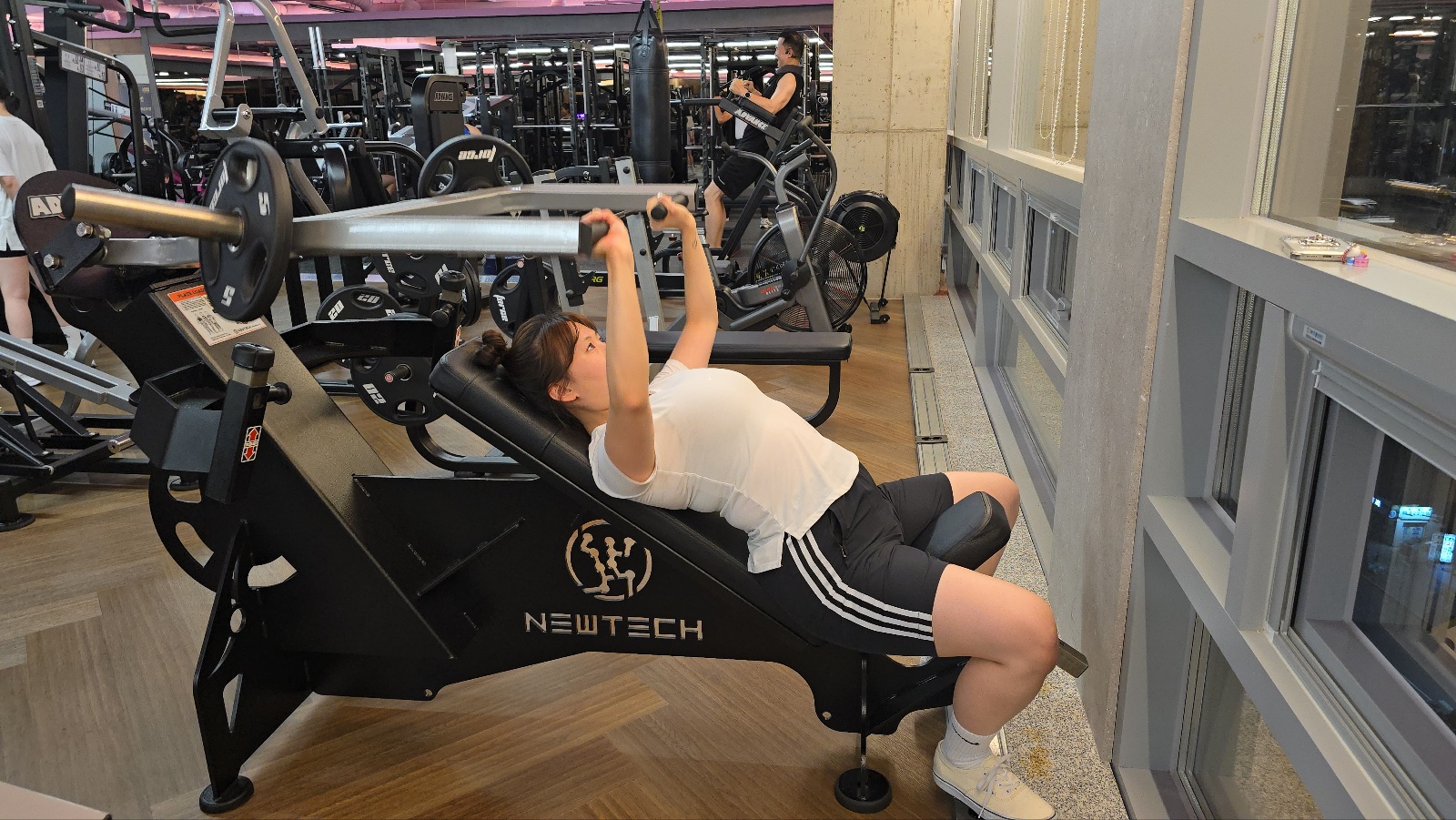
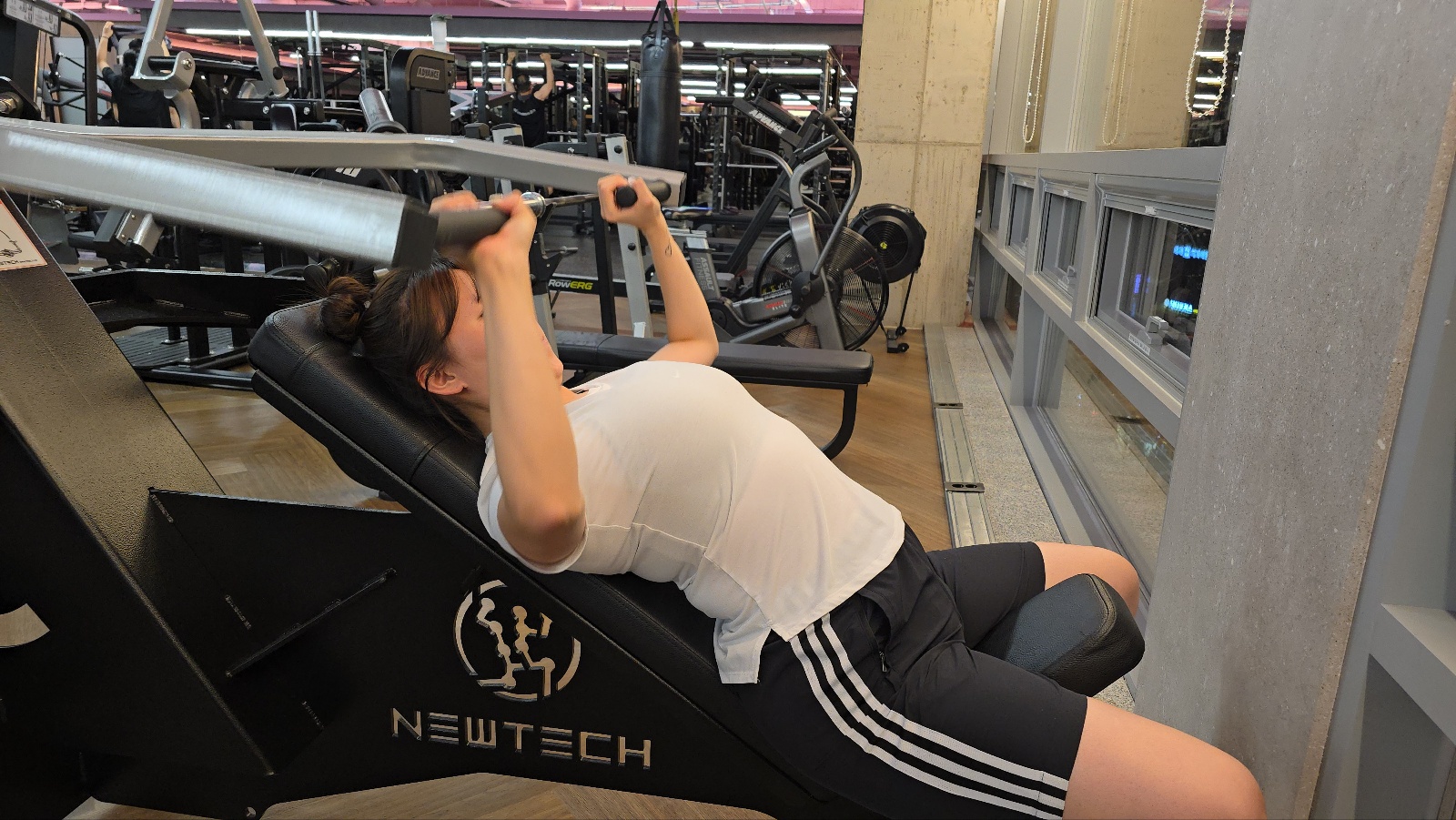
The first exercise is the incline hammer bench press.
Unlike the flat bench press, the incline bench press allows you to engage the entire chest muscle, which is a significant advantage.
In this exercise, the focus was on activating the chest muscles overall, without using heavy weights, and concentrating on muscle engagement.
Special attention was given to the angle of the elbows to ensure the upper chest was adequately worked.
2. Flat Dumbbell Bench Press
10-15x5 Sets
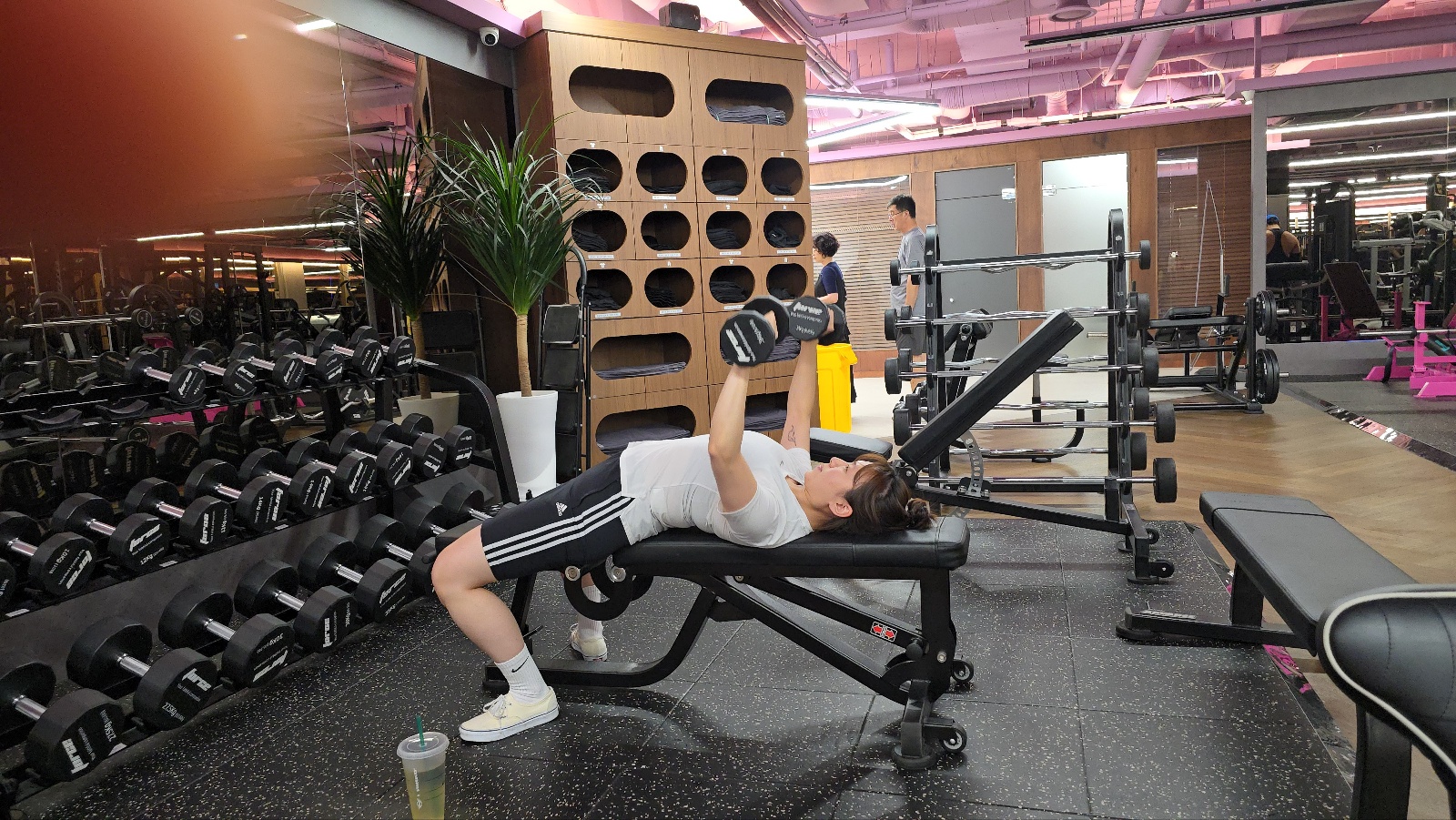
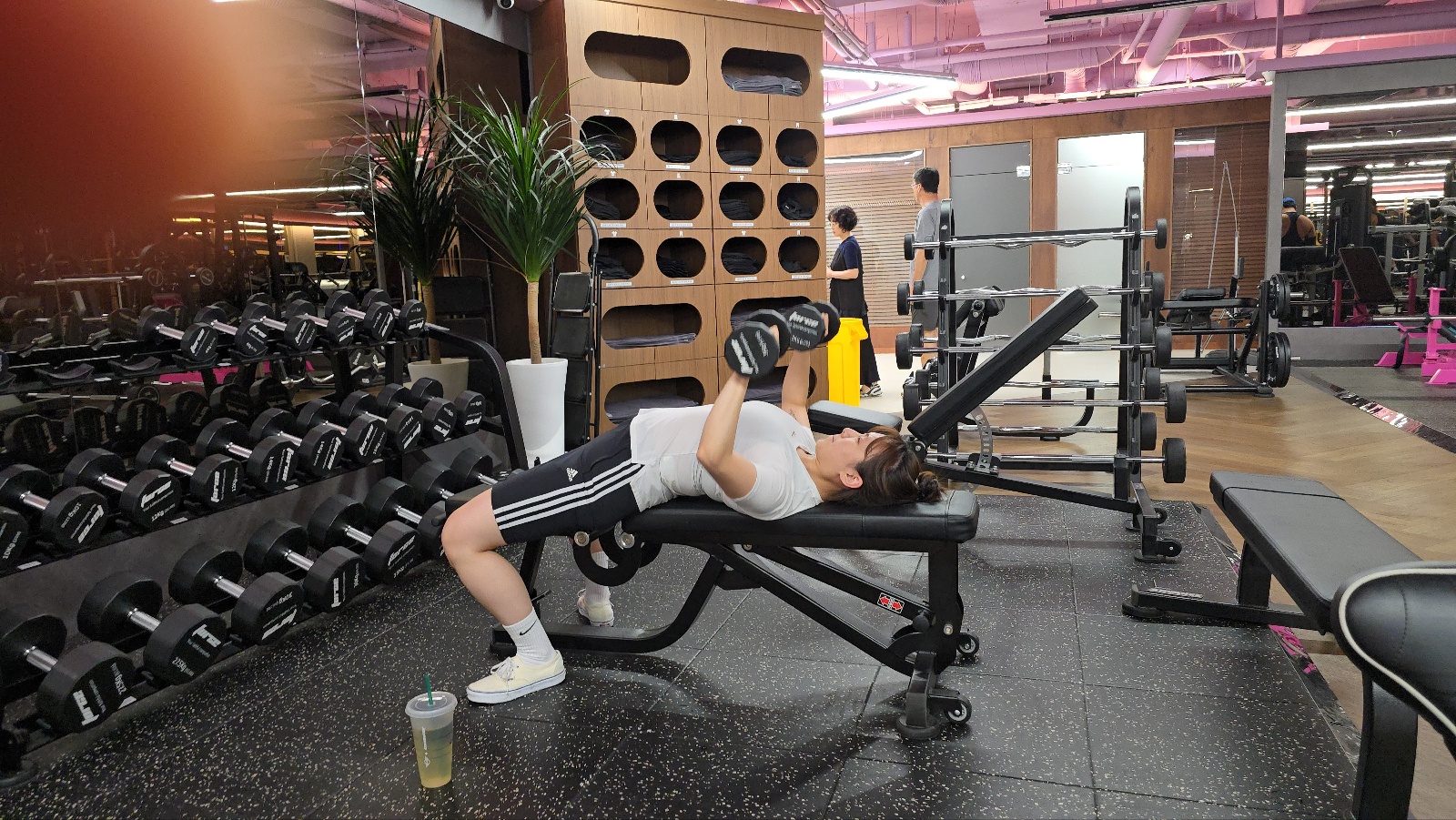
The second exercise was the flat dumbbell bench press.
After properly activating the chest muscles with the incline hammer bench press, we moved on to this exercise, considering the engagement of surrounding stabilizer muscles as well.
In the flat dumbbell bench press, focus on the packing posture mentioned earlier.
The idea was to bring the humerus, where the chest muscle attaches, close to the rib cage beneath the chest muscle.
We gradually increased the weight of the dumbbells while adjusting the grip position.
3. Seated Chest Press Machine
30x4 Sets


The third exercise used the leverage seated chest press machine available in our fitness space in Beomeo-dong.
This exercise focused on the chest muscles' ability to stretch and hold under tension, utilizing the fixed path of the machine.
Unlike previous exercises, the shoulder wasn't packed in this movement. Instead, we fully extended the shoulder joint, making the latissimus dorsi visible from the front, with the rib cage closed and only the thoracic spine extended.
This allowed the chest to stretch during the pull and fully contract on the push.
4. Pec Deck Fly Machine
15x4 set
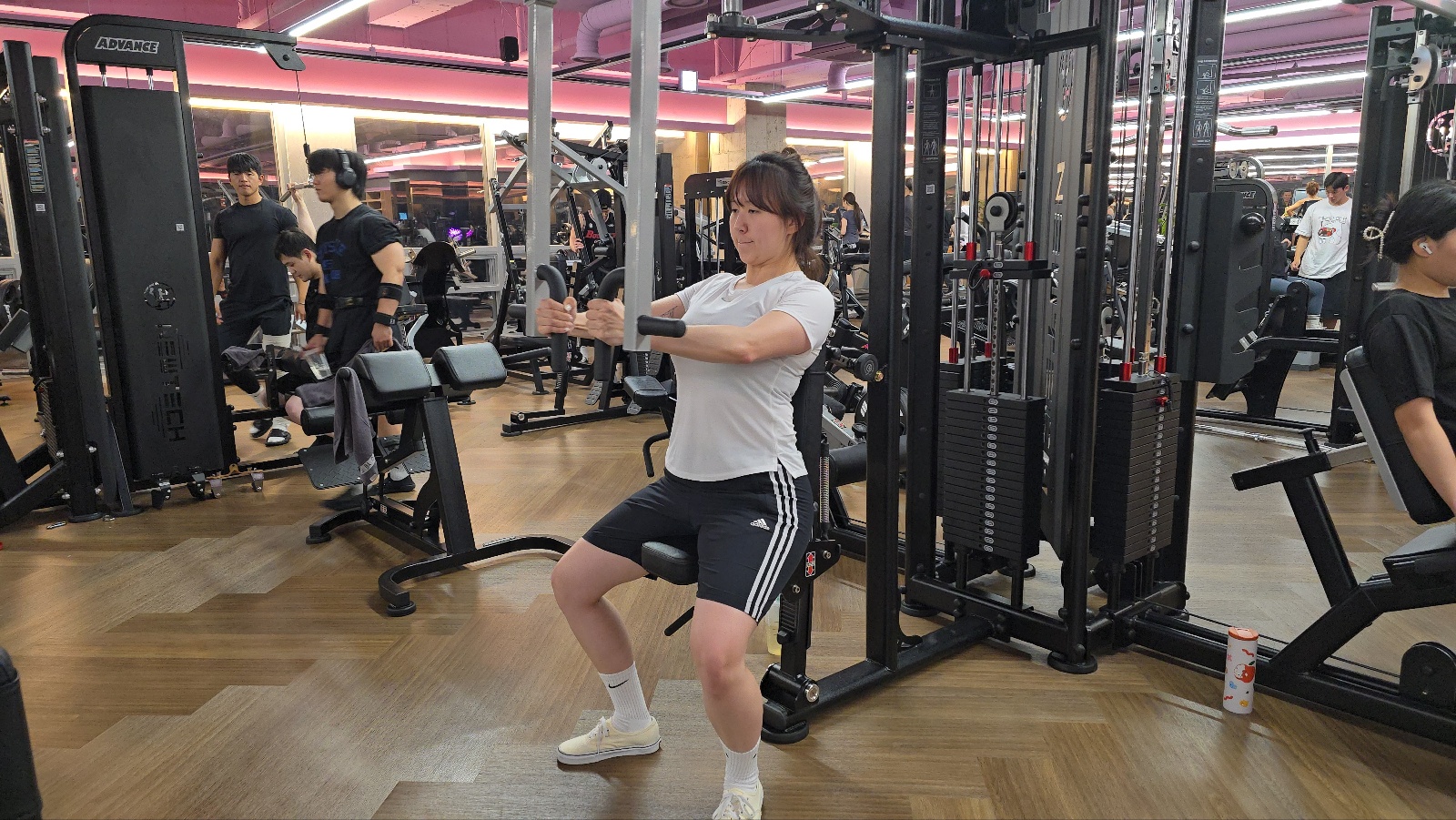
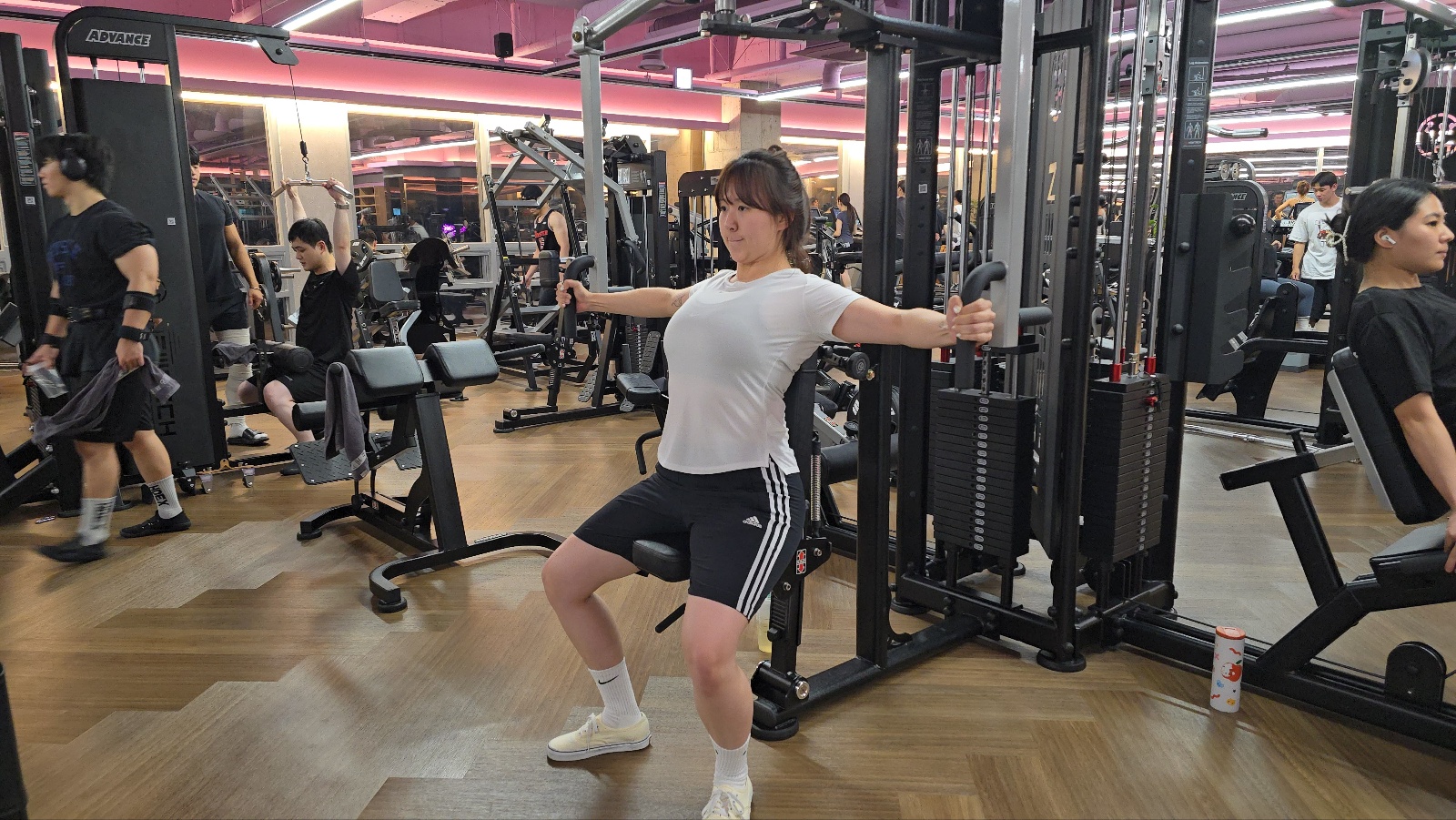
The fourth exercise was the pec deck fly machine.
Since this movement is a type of fly exercise, the arms extend further than in press movements.
This increases the tension or load on the chest muscles compared to press exercises.
Using the principle of a seesaw: if the base is the shoulder joint, the elbows and chest muscles represent the person on the seesaw.
Since the chest muscles are closer to the shoulder joint, it's a less advantageous position for generating force.
To effectively train the chest, you should note the following:
When performing press exercises, if the hands are positioned slightly inside the elbows, the force exerted by the weight will be concentrated inside the elbows. This allows you to lift heavier weights without overly straining the chest.
In contrast, fly exercises are different. The further the load-bearing hand is from the elbow, the greater the force exerted on the chest, even with lighter weights.
Key Point:
The distance of the wrist from the body affects the load on the chest, even with the same weight.
With this understanding of biomechanics, the exercise was performed, and the elbows were slightly bent to avoid loading the elbow joint too much.
In Conclusion
Today, we introduced chest workouts that even beginners can understand and follow at the fitness space in Beomeo-dong, South Korea.
There's a difference in quality between a trainer who simply instructs clients to open their chest and bend their arms and one who explains the biomechanics behind each movement.
Being a trainer is a profession with a low entry barrier.
What kind of trainer would you like to work with?
This concludes today's post on an easy-to-follow chest workout routine for beginners,
brought to you by South Korea Beomeo-dong Fitness Space.
10th Floor, 2273, Dalgubeol-daero, Suseong-gu, Daegu, South Korea.
'Work out Rutine' 카테고리의 다른 글
| Principles of Back Training and Applied Session Log (2) | 2024.09.04 |
|---|
